# Beyond Production: Why Every Successful Mayor Masters the Marketplace
P

Pibasacro
Jul 22, 2026 · EN
51
10
5
Gold earned
0.0061 gold · 0.0001 from the game fund for every read and every like
Reaching your first milestones in the game is an exciting achievement. Your city has begun producing resources, your businesses are operating, and your warehouse is slowly filling with the products of your hard work. At this stage, many players believe that building more factories and expanding production is the only way to become richer. While production is certainly the foundation of every economy, it is only one half of the equation. The other half is trade, and that is where the Marketplace becomes essential.
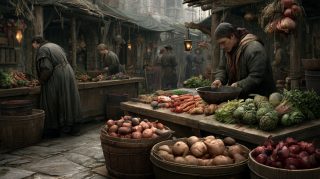
The Marketplace is not simply another menu in the game. It is the place where every city's economy connects with thousands of others. It transforms isolated towns into a living commercial world where resources, products, workers, and investments move continuously between players. Every purchase you make solves a problem for your city, and every sale creates an opportunity for someone else.
One of the first things you should understand is that the Marketplace is entirely driven by players. Unlike many strategy games where resources are sold by the game itself at fixed prices, every item available here has been listed by another player. Someone harvested that timber. Someone mined that iron. Someone produced that clothing or baked that bread. When you buy from the Marketplace, you are buying directly from another city's production.
The same is true when you decide to sell. Your products do not disappear into the game. Instead, they become available for other players who are looking for exactly what you have produced. This simple idea creates a dynamic economy where prices constantly change according to real supply and demand.
Imagine that hundreds of players decide to expand their furniture industries at the same time. Suddenly, the demand for wood increases. As buyers compete for available supplies, prices naturally rise. Later, when more players begin producing wood to take advantage of these higher prices, supply increases and prices gradually stabilize again. This continuous balance between supply and demand keeps the Marketplace active and interesting.
Fortunately, you do not need to become an economist to benefit from these changes. Simply paying attention to prices and trading regularly will help you understand how the economy behaves.
One of the greatest advantages of the Marketplace is the freedom it provides. Your city does not need to produce every resource by itself. In fact, attempting to become completely self-sufficient often slows progress. Every new production chain requires land, construction costs, workers, and maintenance. Expanding into too many industries too quickly can stretch your budget and reduce efficiency.
Instead, successful players specialize.
A city with abundant forests may become an expert in producing wood and furniture. Another city may focus on mining and metal production. A third may invest heavily in agriculture. Through the Marketplace, each city exchanges its strengths for the products it lacks.
This specialization creates a healthier economy for everyone. Rather than duplicating every industry, players concentrate on what they do best and rely on trade to obtain everything else.
The Marketplace is divided into four major trading areas, each serving a different purpose.
The first area is dedicated to **Raw Materials**. These are the basic resources that fuel production throughout the game. Timber, stone, clay, grain, agricultural products, metals, and gold ore are all traded here. Nearly every business depends on these materials, making this one of the busiest sections of the Marketplace.
The second area contains **Consumer Goods**. These are finished products that satisfy the needs of your population. Food, beverages, clothing, tobacco, and jewelry all belong in this category. As cities become larger and wealthier, demand for these products continues to grow.
The third area is the **People Market**, where workers and specialists can be bought and sold. Labor is just as valuable as raw materials because every business depends on qualified employees. This market allows players to adapt quickly to changing workforce requirements.
The final area is the **Share Market**, where CoinRepublik shares are exchanged using GOLD. Unlike physical goods, shares represent investments and provide another way for players to participate in the game's economy.
Although these categories contain different products, using them is remarkably straightforward. Every transaction follows the same pattern. Choose the item you need, compare available offers, select the one that best suits your budget, and complete the purchase. If you wish to sell, create your own listing and wait for another player to accept your price.
Developing good trading habits is far more important than making perfect trades.
Always compare several offers before buying. Prices can vary considerably, even for identical products. Spending a few extra moments reviewing the market often saves money that can later be invested in new buildings or production.
The same principle applies when selling. Pricing your goods too high may discourage buyers, while pricing them too low reduces your profits. Finding a competitive price increases the likelihood of selling quickly while still earning a fair return.
As your experience grows, you will notice that the Marketplace is constantly changing. Some products become expensive because many cities suddenly require them. Others become cheaper when production increases across the server. These fluctuations are perfectly normal and reflect the activity of thousands of players rather than random game mechanics.
Instead of trying to predict every market movement, focus on consistency. Buy resources that keep your businesses productive. Sell products that exceed your city's needs. Reinvest your earnings into industries that generate additional income. Over time, this disciplined approach produces reliable growth.
One particularly convenient feature of the Marketplace is automatic delivery. Every purchase you make is sent directly to your city's shared warehouse. There are no delivery trucks to organize, no transportation delays, and no additional logistics to manage. Your newly purchased resources become available immediately for production.
This same warehouse stores everything produced by your own businesses. Whether resources come from your farms, factories, or another player's city, they all enter the same inventory. This centralized storage system keeps production simple and allows you to concentrate on strategic decisions instead of micromanagement.
The Marketplace also teaches players an important lesson about economics: value is created not only through production but also through exchange. A resource sitting unused in your warehouse has limited value. Once it is sold to someone who needs it, both players benefit. You receive money to invest elsewhere, while the buyer keeps their industries operating. Trade transforms idle resources into productive assets.
Many experienced players check the Marketplace several times a day. They monitor prices, adjust their production plans, and look for profitable opportunities. They understand that the economy is always moving and that staying informed allows them to make smarter decisions.
However, there is no need to rush. Every successful trader began with simple transactions. Buying a small amount of clay, selling extra grain, or hiring a few additional workers may seem insignificant at first, but these small decisions gradually build confidence and experience.
Eventually, the Marketplace becomes more than just a place to trade. It becomes one of your city's greatest competitive advantages. It allows you to expand faster, respond to changing circumstances, reduce unnecessary costs, and generate additional income from resources that would otherwise remain unused.
The strongest cities are not always those with the largest factories or the biggest populations. They are the cities managed by players who understand how production and trade work together. Production creates opportunity, but the Marketplace unlocks its full value. Master both, and your city will continue growing stronger with every transaction, every investment, and every new connection you make within the game's living economy.